AC vs. DC Circuit Breakers: Why Using the Wrong One Could Risk a Fire
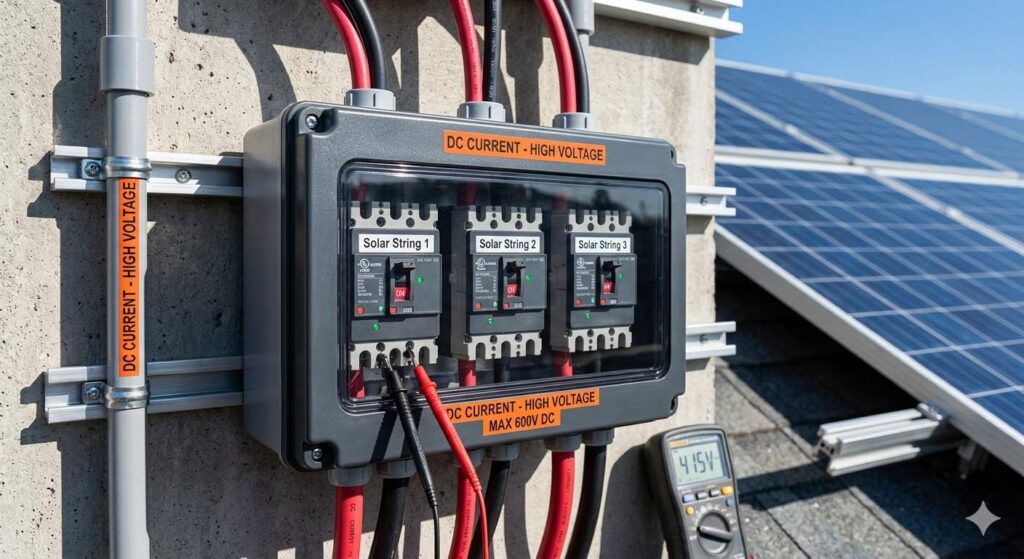
When you think about a solar energy system, you probably picture sleek blue panels on a roof or a high-tech inverter humming in the garage. But there is a silent guardian tucked away in the wiring that keeps the whole operation from going up in smoke: the Solar Circuit Breaker.
As we move through 2026, solar technology has become more efficient than ever, but the physics of electricity remains the same. If you’re building or maintaining a PV (photovoltaic) system, understanding these breakers isn’t just “technical talk”—it’s a safety necessity.
What Exactly is a Solar Circuit Breaker?
At its core, a solar circuit breaker is an automatic switch designed to protect electrical circuits from damage caused by excess current (overload) or short circuits.
In a solar setup, breakers act as the “gatekeepers” between different components. They allow you to manually disconnect parts of the system for maintenance and, more importantly, they “trip” (snap open) automatically if they detect a dangerous electrical spike.
Why Solar Needs Special Breakers
You might wonder, “Can’t I just use a standard breaker from the hardware store?” The answer is a firm no. Solar panels produce Direct Current (DC), which is fundamentally different from the Alternating Current (AC) found in your home’s wall outlets.
AC vs. DC: The Great Divide
The most critical mistake in solar DIY is mixing up AC and DC breakers. Here is why they are not interchangeable:
| Feature | DC Circuit Breaker | AC Circuit Breaker |
|---|---|---|
| Current Flow | One continuous direction. | Reverses direction 50-60 times/sec. |
| Arc Extinguishing | Difficult; requires magnetic blowouts. | Easier; uses the “zero-crossing” point. |
| Placement | Between panels and the inverter. | Between the inverter and the home/grid. |
| Voltage | Often rated for 600V to 1500V DC. | Typically rated for 120V to 480V AC. |
| Physical Size | Compact and standardized | usually large to house bigger safety components |
The Danger Zone: Because DC current doesn’t have a “natural zero” point, an electrical arc (a literal bolt of electricity jumping through the air) is much harder to stop. A DC breaker is specifically engineered with magnets and “arc chutes” to stretch and extinguish that flame-like arc before it starts a fire.
Where Do Breakers Live in Your System?
A robust solar installation usually features breakers in three key locations:
- The Combiner Box: This is where multiple “strings” of solar panels meet. Breakers here protect individual strings from back-feeding or surges.
- DC Disconnect: Located between the panels and the inverter. This allows you to shut off the high-voltage DC power coming from the roof before it hits your electronics.
- AC Main Breaker: Located in your home’s main electrical panel. This connects your solar inverter to your house and the utility grid.
2026 Tech Trends: “Smart” Breakers
The “dumb” switches of the past are being replaced by intelligent protection devices. Modern solar breakers in 2026 now often include:
- Integrated AFCI (Arc Fault Circuit Interruption): These can detect the specific “noise” of a loose wire sparking and shut down the system before a fire starts.
- Remote Monitoring: Many high-end breakers now connect to your Wi-Fi, allowing you to see if a breaker has tripped directly from your smartphone.
- Rapid Shutdown Compliance: To keep firefighters safe, modern breakers are designed to de-energize the entire rooftop array in seconds with the flip of a single switch.
How to Choose the Right Size
Selecting a breaker isn’t about guesswork; it’s about math.
The Golden Rule: Always size your breaker to 125% of the continuous current of the circuit it is protecting.
For example, if your solar string produces a maximum of 20A, you would calculate:
In this case, you would choose a 25-amp breaker. If the breaker is too small, it will trip on sunny days when your panels are working at peak capacity (nuisance tripping). If it’s too large, it won’t trip when a real fault occurs, potentially damaging your inverter.
Conclusion
Solar circuit breakers are the unsung heroes of renewable energy. They might be small, plastic, and hidden away in a box, but they are the only thing standing between a high-performing green energy system and a hazardous electrical event.
Pro Tip: Always check for the UL 489B listing on your DC breakers—this is the gold standard for PV protection. When in doubt, consult a certified electrician. After all, the sun is powerful; make sure you have the right tools to keep that power under control!
Leave a Reply